About Leca



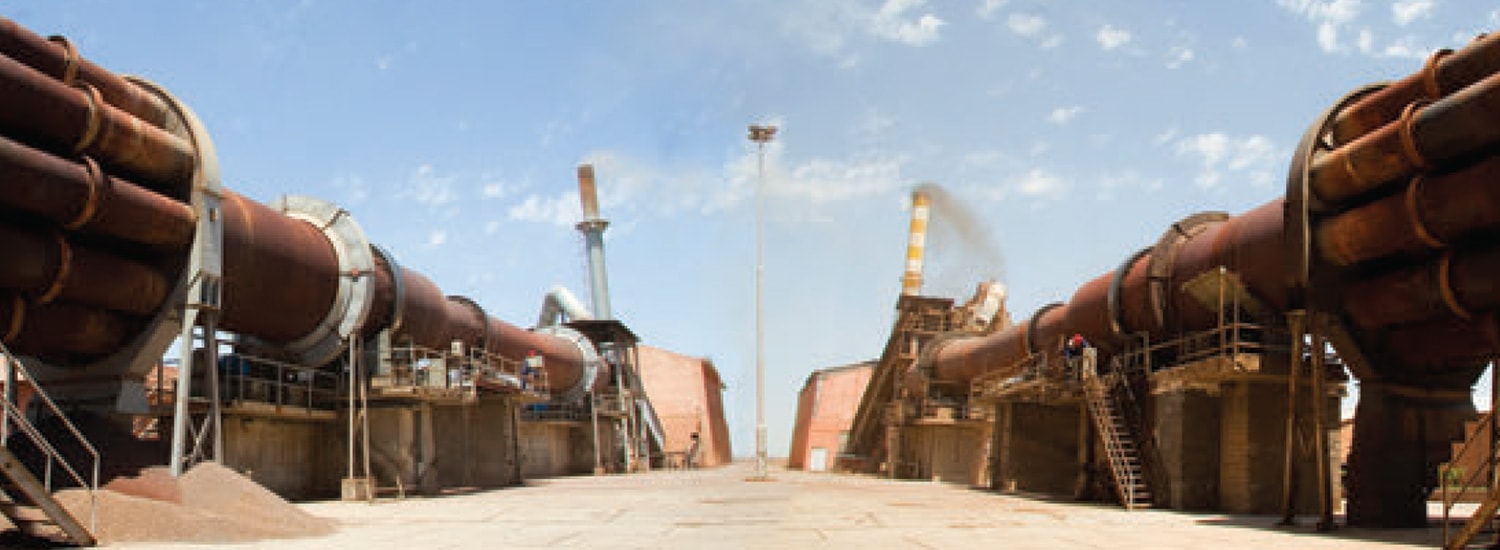
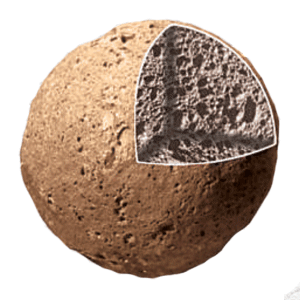
The letters LECA stand for Light Expanded Clay Aggregate. Expanded clay aggregates are porous ceramic products with uniform pore structure of fine, closed cells and with densely sintered, firm external skin. It is manufactured in rotary kilns from raw material containing clay minerals. The raw material is prepared, moulded and then subjected to a firing process at temperature between 1100 and 1200 ºC, is expanded which results signi cant increasing in volume. LECA pebbles internal cellular structure with thousands of air-filled cavities gives thermal and sound insulation properties.
Expanded clay was developed in 1917 in Kansas City, Missouri, as Hydite, and it was also produced in European countries with different names. We are producing LECA since 1979 and exporting to many countries such as, Australia, Bahrain, India, Iraq, Kuwait, Malaysia, Qatar,Saudi Arabia, Singapore, South Africa, South Korea, UAE, Vietnam, etc … .
LECA aggregate advantages
which make every Leca Product
a unique building material.
— LIGHTNESS
— THERMAL INSULATION
— SOUND INSULATION
— FIRE RESISTANCE
— NON-DECOMPOSABILITY
— LIMITED WATER ABSORPTION

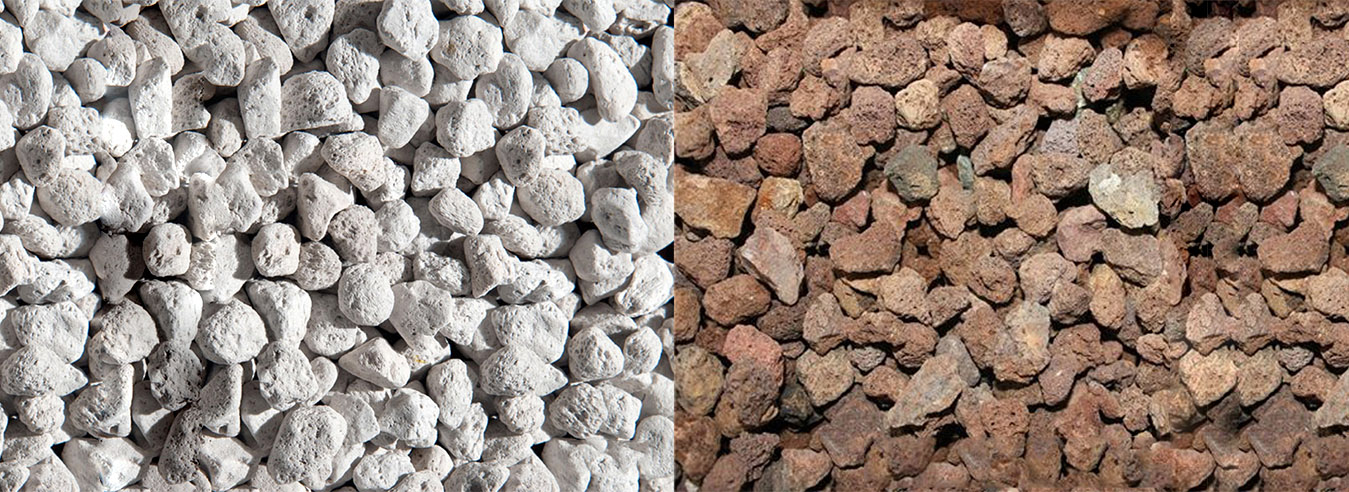
The name pumice is derived from the Latin word pumex, meaning foam. Pozzolan (or pozzolana) is an Italian word, named from Pozzuoli, the place near Naples where pozzolan was first mined and used as cement, during Roman times.
Pumice is a type of extrusive volcanic rock, produced when lava with a very high content of water and gases (together these are called volatiles) is extruded (or thrown out of) a volcano. As the gas bubbles escape from the lava, it becomes frothy. When this lava cools and hardens, the result is a very light rock material filled with tiny bubbles of gas. Pumice is the only rock that floats on water, although it will eventually become waterlogged and sink. It is usually light-colored, indicating that it is a volcanic rock high in silica content and low in iron and magnesium, a type usually classed as rhyolite. If the lava hardens quickly with few volatiles, the resulting rock is volcanic glass, or obsidian. Pumice and obsidian are often found together.